Chickering Grand Pianos for Sale & Commissioned Restorations

Jim Ialeggio rebuilds vintage Chickering grand pianos to recover the tone the modern piano forgot — the warm, clear, low-tension “American sound” of the pre-1900 Chickering. Two ways to own one:

Buy a finished piano. From time to time I have fully restored Chickerings ready to play and ready to ship. When one is available, it’s listed below with full specifications, photographs, and recordings.

Commission a restoration. Most of my work is commissioned. A client asks me to re-create a vintage Chickering — from a piano they already own, one I have in storage, or one I locate for them. I have consistently been able to source whatever vintage Chickering core a client requests. You choose the model and the finish direction; I rebuild it to the same period-authentic standard you see in the instruments below.
Available now

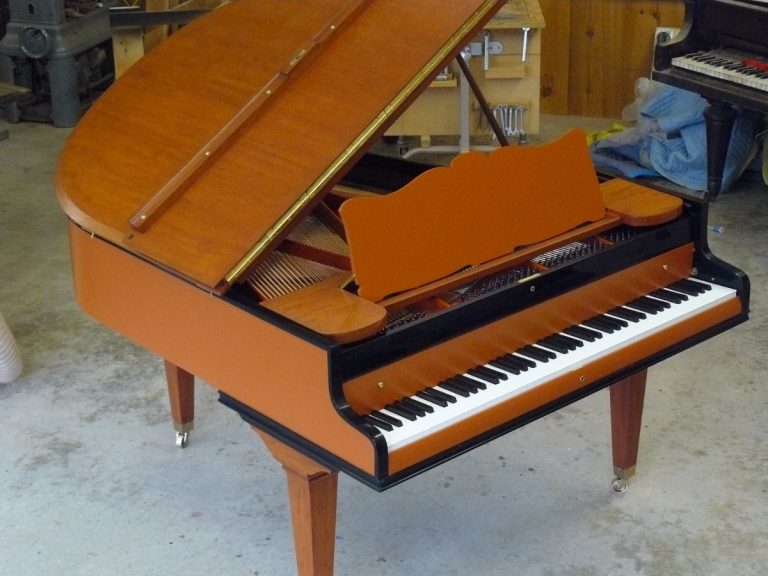
  • Restored Chickering 109c parlor grand

    Chickering 109c

    Details
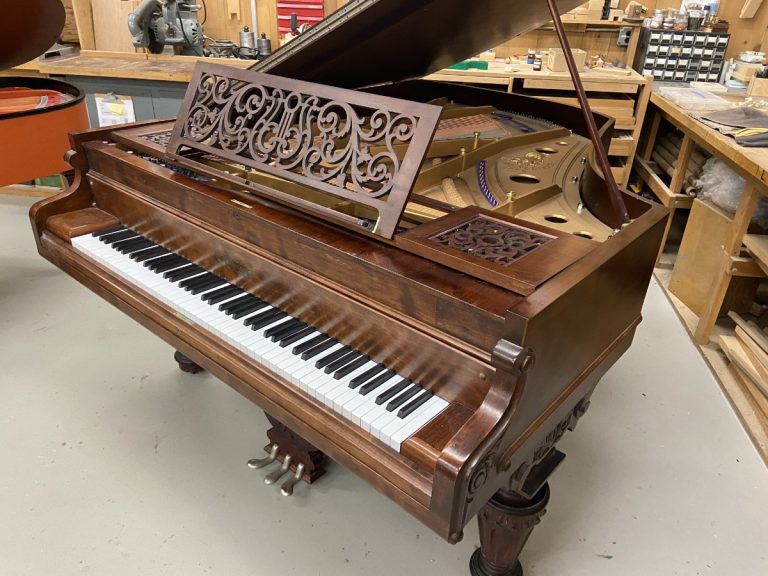
  • Restored Chickering 109c parlor grand

    Chickering 106c

    Details
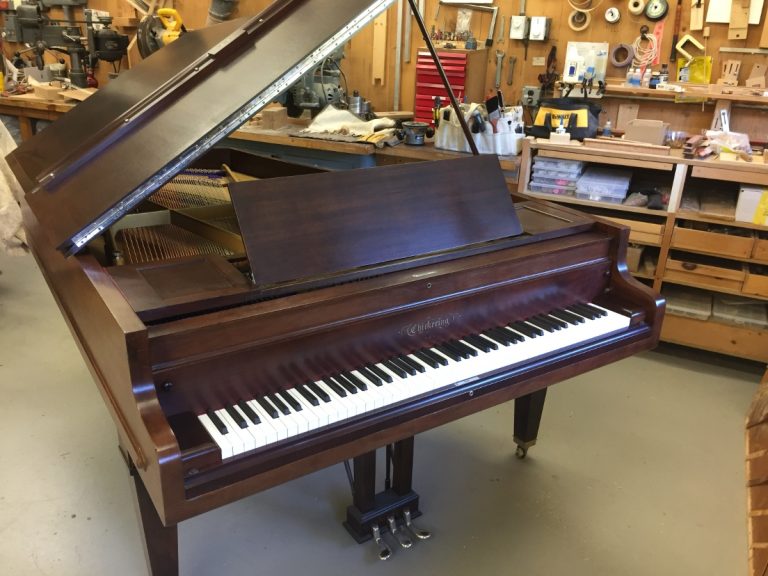
  • Chickering 122 Quarter Grand, keyboard and bass side

    Chickering Quarter Grand 122

    Details

Commissioning a Chickering – How it works

  1. We choose the piano. Tell me the model and size you want. I’ll rebuild a core you own, one from my inventory, or one I locate for you.
  2. I rebuild it the period-correct way. Low-compression soundboard, period-appropriate strings and hammers, and the original Chickering action geometry retained — not a modern piano in an old case.
  3. You receive a finished instrument. Fully restored, voiced, and ready to play.

Commission timelines and pricing depend on the piano and the scope. Contact me to start a conversation.

Why a Jim Ialeggio Chickering

These pianos are rebuilt to sound like a Chickering, not like a generic modern grand. That means choices most shops don’t make:

  • Lightly stressed soundboards. The textural and pitch clarity of a pre-modern Chickering comes from a low-compression, low-stress soundboard with minimal crown.
  • Soft, light hammers. Heavy modern hammers can’t produce this tone; I use a very soft Weickert-style hammer.
  • Original action, original leverage. Chickering’s Erard- and Brown-style actions are excellent. I keep them and their geometry — pianists routinely say these pianos “play themselves.”
  • Period-appropriate strings. Pre-modern wire differed in tensile strength from modern wire; I use Paulello wire chosen to match.
  • Obsolete parts, replicated. Action parts for these pianos aren’t manufactured anymore. I have the machinery, the wood stock, and the knowledge to reproduce them — whole hammer-shank sets, or whole actions, when needed.

Hear the result (download high-resolution audio):